Abdominal Belts and Binders: Features to Check Before Buying
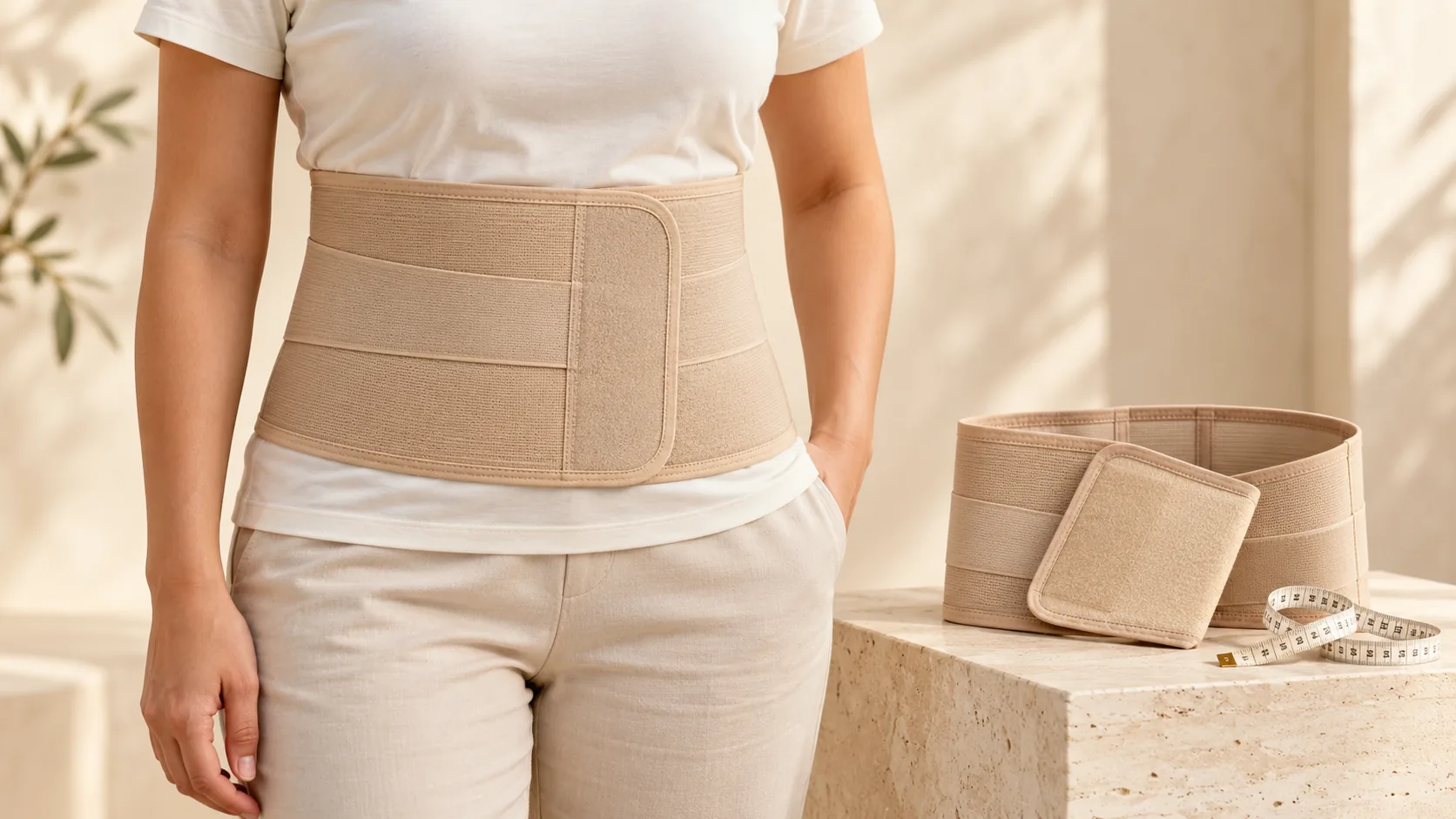
Choosing an abdominal belt can feel straightforward until you start comparing products. Similar photographs may show different heights, materials, fastening systems and intended uses. Terms such as abdominal binder, surgical belt and abdominal support can also appear together, making it difficult to know what you actually need.
The most useful starting point is the reason for wearing the support. Once that is clear, you can compare the measurements and practical features that matter for your body and routine. This guide explains what to check before buying an abdominal belt or binder, including considerations for people who also use ostomy bags.
What is an abdominal binder?
An abdominal binder is a garment that wraps around the abdomen to provide external support or compression. Designs vary: some are broad elastic wraps, while others use shaped panels or different fabrics. Manufacturers may offer adjustable closures so the garment can be secured around the body. OTCBrace
The product name alone does not establish its suitability. Read the manufacturer's intended use and instructions for the exact model. A photograph of a wide belt cannot tell you whether it matches the support recommended by your healthcare professional.
If you have been prescribed a particular design, keep those details available while shopping. They provide a clearer reference than general phrases such as extra support or maximum comfort.
Start with the intended purpose
For use after abdominal surgery, ask your surgical team whether a binder is needed. The Royal Marsden explains that, when one is required, a physiotherapist discusses its use and the surgical team advises when to stop wearing it. This is an individual recovery decision. patientinfolibrary.royalmarsden.nhs.uk
Before buying, clarify which area needs support, which garment is appropriate and whether you need help with fitting. If the recommendation is for a specific product, ask before substituting another model.
Use the same approach when shopping for someone else. Knowing their clothing size and operation date is insufficient. A clear recommendation helps you choose a product for the intended purpose rather than relying on advertising language.
Abdominal binders and ostomy belts have different roles
An ostomy belt may be a narrow elastic accessory that attaches to compatible belt tabs on a pouching system. For example, Hollister specifies that its Adapt ostomy belt is used with pouches that have belt tabs. Compatibility must be checked against the actual pouch. Hollister US
A hernia support garment for someone with a stoma serves a different purpose. Sussex NHS guidance recommends assessment by a stoma care nurse and measurement and fitting by a trained professional. Pocketed ostomy underwear is also distinct from a garment intended for hernia support. sussexformulary.nhs.uk
When searching online, include the complete product type. Abdominal binder, ostomy appliance belt and stoma hernia support belt should lead you to different questions about suitability.
Measure using the product's own size chart
Choose a size using the manufacturer's measuring instructions rather than your usual trouser size. Check where the tape should sit and whether the chart uses centimetres or inches. For example, OTC's three-panel binder specifies measurement around the fullest part of the abdomen. Other products may use different instructions. OTCBrace
Record the measurement and compare it with the stated fitting range. If you are between sizes, ask the manufacturer or the professional fitting your support how to choose.
Avoid assuming that small, medium and large mean the same thing across brands. Even products with similar names can have different charts. Current measurements are more useful than the size of a belt purchased months or years earlier.
Check coverage as well as circumference
Circumference describes the distance around your body. Garment height describes how much of the abdomen the binder covers from top to bottom. Both measurements belong on your comparison list.
If a listing mentions three or four panels, check the actual dimensions instead of choosing by panel count alone. OTC describes a three-panel construction intended to follow body contours, but this is a feature of that particular design. OTCBrace
Ask the person fitting your support where its upper and lower edges should sit. A taller garment is not automatically the right choice for every torso. Product photographs can help you understand the construction, but they cannot confirm how the same garment will fit your body.
Look closely at materials and construction
Check the material information for the exact model. Abdominal supports do not all use the same fabric: Promedics, for example, describes a neoprene binder. Do not assume every product is cotton, latex-free or made with a particular skin-contact layer. Promedics Orthopaedics
Look for clear details about the outer fabric, lining, elastic components and seams. If you have a known material sensitivity, confirm the composition before ordering. A general claim of softness does not answer an allergy question.
For shopping in India's warmer conditions, ask what the manufacturer means by breathable fabric and how the garment should be cared for. Specific material information is more useful than a long list of comfort claims without supporting details.
Consider how you will fasten it
Check whether the binder uses one broad fastening area, separate straps or another closure arrangement. Look at photographs showing the garment open and closed. These views often explain the design better than a photograph showing only the front.
Think about who will put it on. Can the wearer reach the fastening area and manage the closure, or will someone help? If hand movement is limited, ask for a demonstration of the exact product.
Also confirm the stated adjustment range. A description such as universal size still needs measurements. Compare the fitting range, required overlap and fastening instructions before deciding whether the design suits the person who will wear it.
Follow individual fitting and wearing instructions
Ask your healthcare professional to show you the correct position and fastening method. Confirm whether the support should sit over clothing and how to manage any dressings, drains or other medical devices. Instructions can vary with the garment and the reason it was supplied.
For example, North Tees NHS advises patients using its prescribed spinal or abdominal supports to follow the instructions given at their clinical appointment. Its leaflet also recommends a close-fitting cotton layer for those supports. That advice should not be treated as a universal instruction for every product. nth.nhs.uk
Keep the fitting instructions with the garment. If a caregiver helps, make sure they understand the same directions rather than developing a different fastening routine.
Comfort should not depend on excessive tightening
Do not tighten a binder so much that it affects breathing. Worcestershire NHS specifically includes this precaution in its abdominal binder guidance. Feeling greater pressure is not a reason to keep tightening the garment. Worcestershire Acute Hospitals NHS Trust
If it feels uncomfortable, check the position and seek advice about the fit rather than assuming you need a smaller size. North Tees NHS recommends monitoring skin for redness, soreness or inflammation and arranging a review when pressure or tenderness causes concern. nth.nhs.uk
Ask your clinician what to do if discomfort develops during use. A clear plan is more helpful than trying to tolerate a garment that no longer feels suitable.
Take extra care when you have a stoma
If you use a colostomy or ileostomy pouch, involve your stoma care nurse before choosing an abdominal support. Bring the details of your pouching system and any existing support garment to the discussion.
Ask how the recommended garment works with your appliance, whether an opening is required and how you will access the pouch for routine care. These are practical fitting questions that a generic product photograph cannot answer.
Do not buy solely because a listing includes the word ostomy. Check whether it describes a pouch attachment belt, supportive underwear or a garment assessed for hernia support. The distinction helps you discuss the right product with your nurse before ordering. sussexformulary.nhs.uk
Understand washing and replacement requirements
Read the care label before purchase. Confirm whether the garment can be washed, which cleaning method is specified and how it should dry. Follow the instructions for the exact model rather than copying a routine from another belt.
North Tees NHS advises hand washing its fabric supports with mild detergent and allowing them to dry naturally. It also recommends review if a support becomes worn and no longer functions effectively. Your product's instructions remain the reference for its care. nth.nhs.uk
Check the fastening and fabric regularly. If the garment no longer stays secured or its condition changes, ask whether it needs replacement. Consider drying time when planning how to maintain a prescribed wearing routine.
Compare the details before you order
Before buying an abdominal belt or binder from CuraRich, confirm the product type, model, size range, garment height, materials and closure. Check the pack quantity and care instructions, too. Save the relevant product details so you can refer to them when the order arrives. If a specification is missing, ask for clarification before purchase rather than guessing from another product in the category.
Choose with your healthcare recommendation and measurements in front of you. Clear specifications make it easier to compare options, ask useful questions and select a support that matches the intended use.