Insoles and Heel Supports: Understanding Types, Fit and Everyday Use
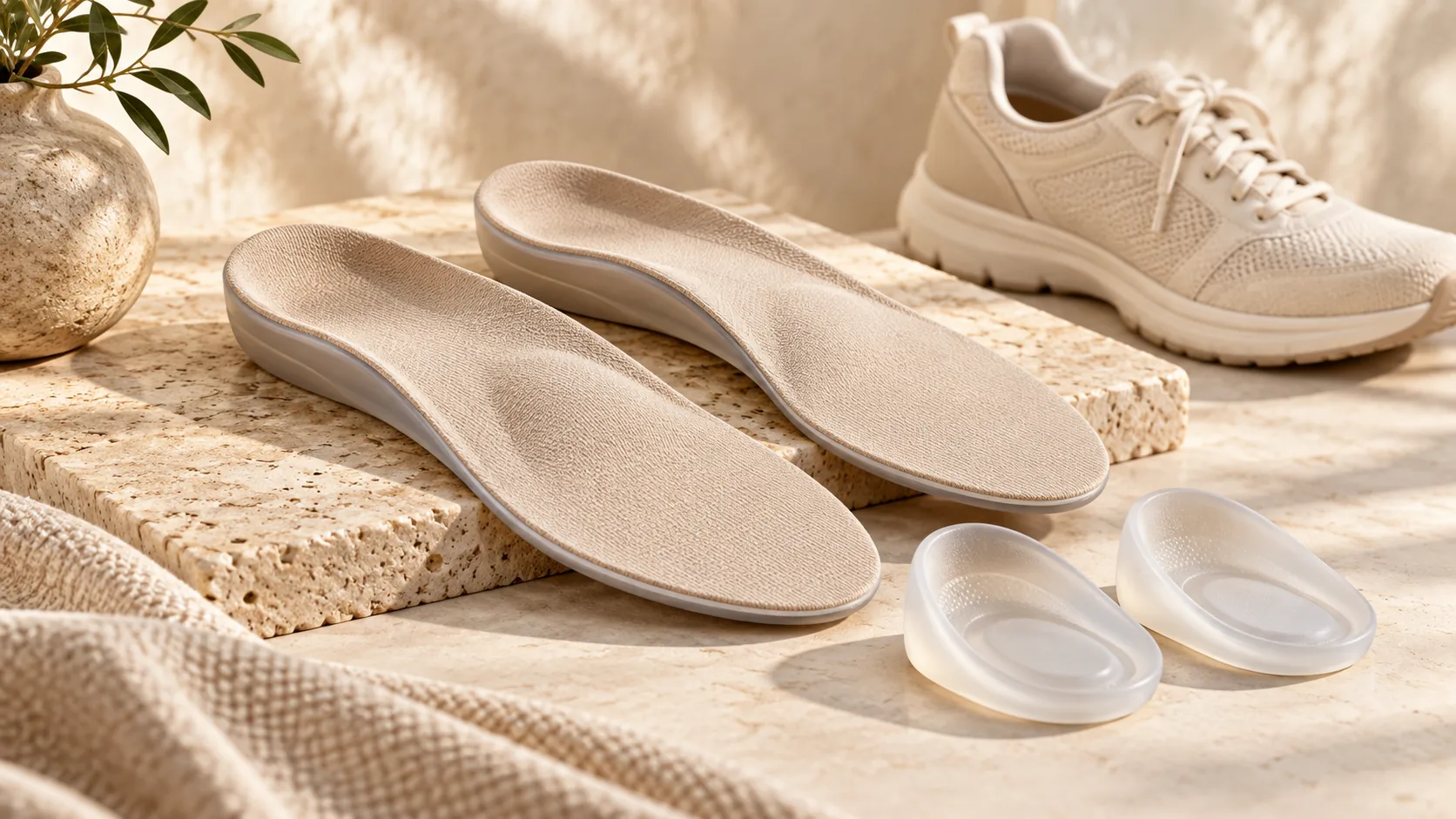
Shopping for insoles can be confusing when several products look similar but promise different benefits. A full-length insert, a small heel cushion and a shaped arch support may all sit inside a shoe, yet their designs and intended uses can differ considerably.
Consider the area the product covers, the support or cushioning it is designed to provide and whether it will fit your footwear. If you are buying because of persistent pain or a diagnosed condition, professional advice should guide that decision.
This guide explains common insole and heel support types, the details to compare before ordering and practical considerations for everyday use.
What are insoles?
Insoles are inserts placed inside footwear. Depending on their design, they may cushion the foot, provide support or influence how the foot works during movement. The term includes a wide range of products, from simple comfort inserts to devices selected after a clinical assessment.
Guy's and St Thomas' NHS describes two broad clinical categories: functional devices, which provide support to reduce strain, and accommodative devices, which cushion particular areas to ease pressure. A podiatrist determines which approach is appropriate for the individual. guysandstthomas.nhs.uk
For shopping purposes, look beyond the word orthotic. Check the actual construction, intended use, size and fitting instructions. A product title is only the beginning of the comparison.
Full-length insoles and shorter inserts
A full-length insole extends from the heel towards the toes. Shorter inserts cover only part of the foot, so their position inside the shoe is different. Product photographs and dimensions should make the coverage clear.
Before choosing, ask whether you need cushioning across the foot or a support recommended for a particular area. Coverage alone does not establish clinical suitability. A longer insert is not automatically more effective than a shorter one.
Check whether the product is supplied in fixed sizes or designed to be trimmed. Also confirm whether it replaces the shoe's existing removable insole. These details help you assess how much room the insert will occupy and how it should be fitted.
Heel cushions and heel cups
Heel cushions are smaller inserts intended for the heel area. A heel cup has a shaped profile around that area, while other heel pads may have a flatter design. Compare the photographs, dimensions and manufacturer's description rather than treating every heel support as identical.
Some silicone heel cushions are designed to cushion the heel and distribute pressure. Full-length silicone insoles can provide cushioning over a larger area. These are design purposes, not a promise that either product will resolve every cause of pain. Tynor
For a customer comparing the two, the practical question is where the recommended cushioning is needed. Confirm the product type before choosing by appearance, colour or price.
Heel lifts serve a different purpose
A heel lift is intended to raise the heel inside footwear. It should not be treated as interchangeable with a cushion chosen mainly for softness. Some lifts have removable layers that allow the height to be adjusted.
Dorset HealthCare explains that heel lifts may be prescribed following measurement of a leg length difference. The required height and the shoe in which it is used depend on that assessment. dorsethealthcare.nhs.uk
If a healthcare professional recommends a lift, confirm its height and fitting instructions before buying. Do not estimate a leg length difference from how you stand in a mirror or copy another person's setup. Keep the clinical recommendation separate from general comfort shopping.
Materials: read the exact product details
Check the material specification for the model you are considering. Silicone products are one option, but an insole listing may describe a different cushioning material, a fabric surface or a combination of layers. The construction matters as much as the material name.
Look for details about the top surface, support shape and thickness. Product descriptions may also identify softer zones or a contoured arch section. For example, a silicone insole can combine cushioning with a shaped profile rather than being a completely flat insert. Tynor
Avoid assuming that every product is washable, hypoallergenic or suitable for the same footwear. If you have a known material sensitivity, ask for clear composition information before ordering.
Choose the size using the manufacturer's chart
Start with the size chart for the exact product. Check whether the listing uses UK, EU or US shoe sizes, or measurements in centimetres. A size number without its sizing system can easily lead to an incorrect order.
If the chart gives a range, confirm which size matches your foot and intended shoes. For heel cups, also check the shape and width shown in the product details. A small accessory still needs enough room to sit as intended.
When buying for someone else, record their shoe size and footwear type. Keep the selected model and size together in your order notes, especially when comparing several similar-looking options across different listings.
The shoe and insert must fit together
An insert takes up space inside footwear. The Royal National Orthopaedic Hospital advises choosing shoes that remain comfortable with the insoles in place and taking your insoles along when buying new shoes. Some footwear has removable insoles that can be replaced with the prescribed device. rnoh.nhs.uk
Consider shoe depth, width and how securely the shoe fastens. Bexley NHS guidance highlights room around the toes and heel, alongside an adjustable fastening such as laces or straps. msk-bexley.nhs.uk
Check the complete fit rather than the insert alone. If the addition makes the shoe tight, causes rubbing or changes how securely your heel sits, seek fitting advice. Do not assume the footwear will become suitable simply through continued wear.
Trim only when the design allows it
Some insoles can be trimmed to fit a shoe; others should be used at their supplied size or adjusted by a professional. Confirm the instructions before cutting. Do not modify a prescribed device without checking whether that adjustment is appropriate.
Dorset County Hospital's trimming guide uses the existing shoe insole as a template, aligning the heels before marking the outline. It also emphasises that material removed cannot be put back. Dorset County Hospital
Work cautiously and follow the instructions for your specific product. An insert trimmed for one shoe may not fit another shoe in the same way. Photograph the original size and markings if you want a reference while making an approved adjustment.
Introduce prescribed insoles gradually
Follow the wearing schedule provided by your podiatrist or orthotist. Clinical guidance commonly recommends gradually increasing wear time, allowing the body to adjust to a prescribed insole. The schedule should match the device and the advice you received. nth.nhs.uk
Do not begin with a long shift or an extended walk simply because the insert feels comfortable during the first few minutes. Ask how to introduce it into your usual activities and what changes to monitor.
Mild initial unfamiliarity is different from severe pain. Guy's and St Thomas' advises stopping use and informing the podiatrist if insoles cause severe pain or aching. Persistent discomfort may mean the device needs adjustment. guysandstthomas.nhs.uk
Everyday use: keep expectations realistic
Think about the footwear you wear throughout the week. Work shoes, walking shoes and occasional footwear may have different internal shapes. Check the fit each time you move an insert between pairs, following the product or clinical instructions.
Describe your routine when seeking advice. Time spent standing, walking distances and the shoes required at work are useful details for a fitting discussion. They do not, by themselves, identify which medical device you need.
Insoles may form part of a broader care plan that includes exercises or footwear changes. They should not be presented as a guaranteed cure or a replacement for the rest of that plan. guysandstthomas.nhs.uk
Cleaning, inspection and replacement
Use the cleaning instructions supplied with your product. Do not assume that a silicone heel cushion and a layered orthotic insole can be cleaned in the same way. Check whether wiping, washing or another method is permitted.
Inspect the insert for wear, damaged edges and changes in its surface. The Royal National Orthopaedic Hospital recommends checking prescribed orthoses and footwear for sharp edges, loose parts or debris, as well as inspecting the skin. rnoh.nhs.uk
Avoid choosing a replacement schedule from advertising alone. Ask the manufacturer about expected care and seek a review if a prescribed device becomes damaged or no longer fits properly. Keep the model details so replacement discussions are easier.
When to seek professional advice
Heel pain has several possible causes. NHS guidance advises assessment when pain is severe, worsening, recurring or has not improved after two weeks of home care. Tingling, reduced sensation or heel pain in someone with diabetes also warrant medical advice. NHS
If you have reduced sensation, poor circulation or an existing diabetic foot care plan, speak to your clinician before selecting inserts. Bexley NHS guidance stresses daily foot inspection for people at increased risk of skin damage. msk-bexley.nhs.uk
Before ordering from CuraRich, confirm the product type, material, size chart, coverage, pack quantity and fitting instructions. Compare those details with your footwear and any professional recommendation. Clear specifications help you choose appropriately and use the product with realistic expectations.