Ostomy Bags and Stoma Care Accessories: Understanding Your Supplies
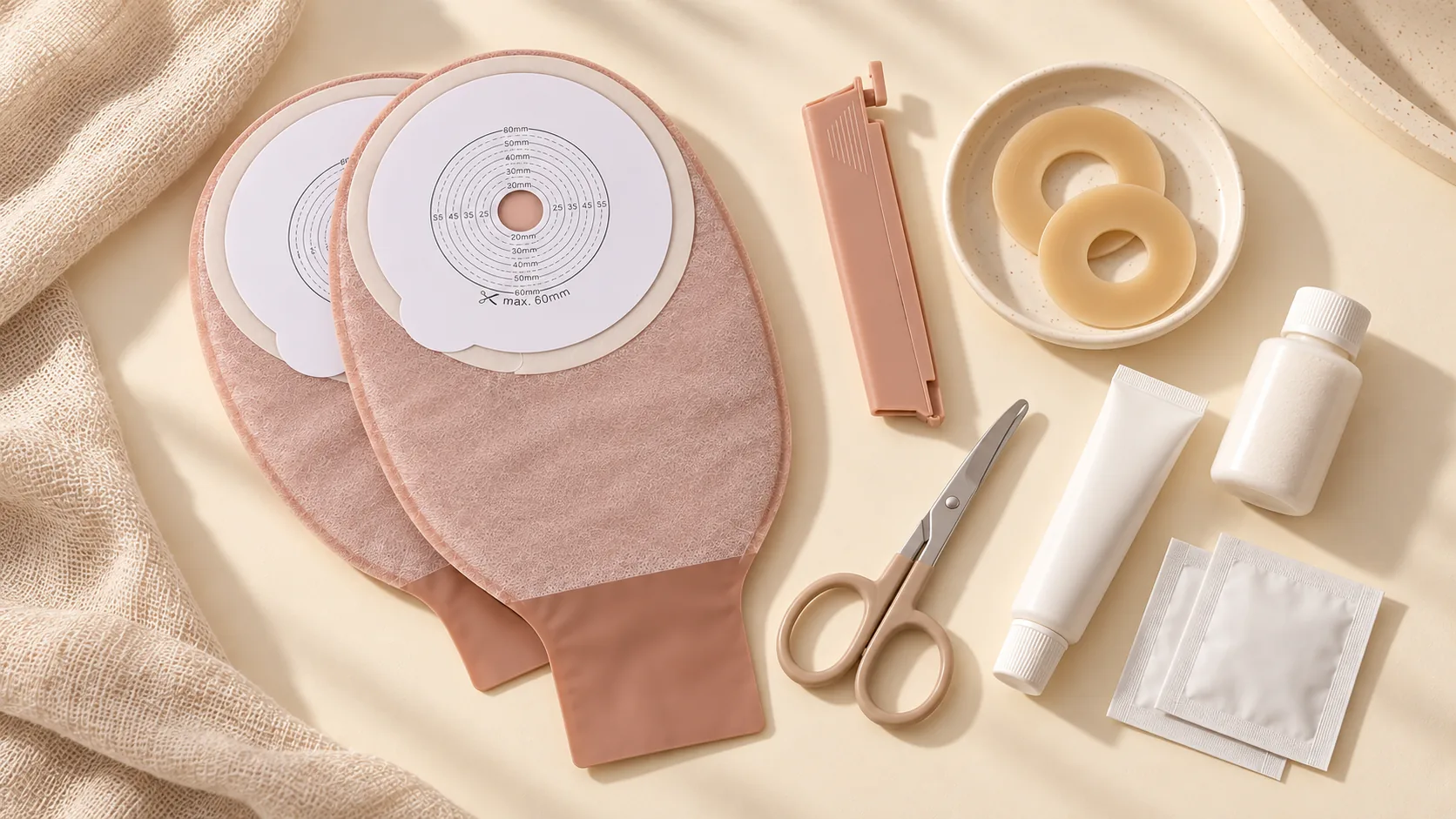
Buying ostomy supplies becomes easier when you understand what each product does. A pouch collects output, a skin barrier attaches the system to your body, and accessories address particular fitting or care needs. Similar names and product photographs can make these differences difficult to recognise, especially when ordering online for yourself or a family member.
This guide explains the main types of ostomy bags, common stoma care accessories and practical details to check before buying. Use it to understand product descriptions and prepare questions for your stoma care professional. Your individual pouching routine should follow their advice and the instructions supplied with your products.
What is an ostomy bag?
An ostomy bag, also called an ostomy pouch, collects output through a surgically created opening called a stoma. “Ostomy” is the broader term; “colostomy” describes one specific type. A colostomy involves the large bowel, while an ileostomy involves the small bowel. A urostomy diverts urine through a stoma.
This distinction matters when shopping. A pouch described as an ostomy bag is not automatically suitable for every ostomy type. Urostomy pouches have features intended for urine drainage, including a drainage outlet and, depending on the system, connections for additional collection equipment. Check the stated intended use rather than relying on the general category name. NHS
Understanding the pouch and skin barrier
Most pouching systems have two essential components: the collecting pouch and the skin barrier. The barrier adheres to the skin around the stoma, often called peristomal skin. You may also see it described as a wafer or baseplate. UOAA
Product descriptions sometimes use “flange” for a barrier or connecting component. Because terminology varies, compare the actual design and measurements. On a two-piece system, the coupling size determines which pouch and baseplate connect. The opening around the stoma is a different measurement.
Many barriers use hydrocolloid adhesive materials. However, adhesive formulation, flexibility, shape and intended wear characteristics differ between products. Matching a familiar brand name alone does not establish that two models have the same barrier.
One-piece and two-piece ostomy systems
A one-piece ostomy system combines the pouch and skin barrier into one attached unit. There is no separate coupling step. When replacing the system, you remove and replace both components together.
A two-piece ostomy system has a separate barrier and pouch. The pouch attaches using the specified coupling or attachment mechanism. This allows the pouch to be detached while the barrier remains in place when appropriate for that system and care routine.
Neither design is universally better. Stoma characteristics, body contours, handling preferences and daily activities influence the choice. Your ostomy nurse can help assess these factors. If buying a two-piece system, confirm compatibility between both components; matching the diameter alone may not be enough. UChicago Medicine
Drainable, closed-end and closure options
A drainable pouch has an outlet that opens for emptying while the pouch remains attached. A closed-end pouch has no bottom emptying outlet and is removed for disposal according to its instructions. These terms describe emptying design, independently of whether the system is one-piece or two-piece.
Drainable closures also vary. Some use a separate plastic clamp; others have an integrated fastening. Do not assume that every drainable pouch uses Velcro or that every model from one manufacturer closes identically. UOAA
Check how the outlet closes and whether the necessary closure device is included. A reusable clamp does not mean the pouch itself is designed for washing and repeated reapplication.
Cut-to-fit openings and sizing
Cut-to-fit barriers allow the opening to be customised within the product's stated limits. Pre-cut barriers have an opening already prepared to a specified size. The correct opening must account for the stoma's size and shape, so follow the fitting method taught by your healthcare professional. UOAA
For example, “cut-to-fit up to 60 mm” means 60 mm is the maximum permitted opening. It does not mean every user needs a 60 mm hole, and it does not automatically describe a two-piece coupling size.
Keep a record of the exact model and relevant measurements. If you are unsure which number refers to the opening, ask the supplier to clarify before ordering.
Barrier rings and stoma paste
Barrier rings are shaped sealing accessories used around the stoma. Depending on the product, they can help fill uneven contours and reduce the chance of output getting beneath the skin barrier. Designs vary in thickness, size and material, so follow the specific ring instructions. Hollister US
Stoma paste generally serves as a filler or sealant for gaps and uneven areas. It should not be treated as ordinary glue. More paste does not necessarily create a better seal, and excessive application can interfere with fitting. Hollister NZ
Rings and paste serve related purposes but are not automatically interchangeable. Ask your stoma care professional whether either is needed for your current system rather than adding both simply because they appear in an accessory kit.
Stoma powder and protective wipes
Stoma powder is intended for particular skin care situations, including absorbing moisture from affected peristomal skin. It is not a routine substitute for checking why the skin is irritated. Excess powder can interfere with barrier adhesion. Use it as instructed by your healthcare professional, and do not confuse standard stoma powder with medicated or antifungal products. Peristomal Skin Assessment Guide for Consumers
Skin protective wipes form a protective film on the skin. Their compatibility with different barriers varies, and drying instructions matter. Hollister NZ
Choose these products for an identified purpose. A larger collection of accessories does not necessarily make a pouching routine more effective or easier to manage.
Adhesive removers and everyday preparation
Adhesive remover products assist with releasing the adhesive during removal. They perform a different job from protective barrier wipes. Similar packaging does not make the two products interchangeable. Check the label carefully, particularly when storing several wipe types together.
A basic changing setup may include a replacement pouch, suitable cleaning materials, warm water and a disposal bag. Clean and thoroughly dry the surrounding skin before applying the new system, following the routine taught by your stoma nurse. Additional seals, powder or protective wipes should be used when advised. chelwest.nhs.uk
Organise supplies so their names and purposes remain visible. This helps caregivers avoid selecting the wrong item during a change.
Ostomy belts, scissors and barrier extenders
An ostomy belt may provide support for a compatible pouching system. Attachment designs vary, so confirm whether your pouch has suitable belt tabs. A general abdominal binder is a separate product and should not be assumed to connect to an ostomy pouch. Hollister NZ
Scissors and measuring guides help prepare cut-to-fit openings. Use the tools and method recommended for your product, taking care not to damage the pouch while cutting.
Barrier extenders, including curved adhesive strips, support the outer edges of compatible barriers. They cannot correct every fitting problem. If output is leaking beneath the barrier, adding tape over the outside is not an appropriate substitute for changing the leaking system and reviewing the fit. Peristomal Skin Assessment Guide for Consumers
Comparing product listings before ordering
Start with the intended ostomy type, then check the system design, opening range, barrier style and outlet closure. Confirm whether you are ordering complete one-piece pouches, separate two-piece components or accessories alone.
Next, compare pack quantities and box contents. Ten pouches do not necessarily mean ten clamps or ten separate baseplates. A photograph showing an accessory does not establish its included quantity.
For the BAO Health 102BNC listing discussed here, the identifying details are a one-piece drainable pouch, a cut-to-fit opening up to 60 mm, translucent film, a nonwoven covering and a separate plastic clamp closure. The selected pack contains ten pouches. Confirm current listing details before purchase.
Keep a practical record for reordering
Save a photograph of the product label alongside your order history. Record the manufacturer, model code, opening range, closure type and pack quantity. Keep accessory details on the same record, including which items are separate purchases. If someone else orders for you, share this information instead of asking for “the usual bag.” Before accepting a substitute, compare every relevant specification and confirm suitability with your care team. A lower pack price can also be misleading when quantities differ. Compare the price per pouch, then account for any required components or accessories purchased separately. This record also helps you identify differences when a listing is updated.
Planning supplies and getting support
Keep enough of your usual supplies available to accommodate ordering and delivery time. A written list of model codes, sizes and required accessories makes repeat purchases easier, especially when another person places the order. United Ostomy Associations of America
Review storage directions and expiry information on the packaging. Keep reusable accessories identifiable and follow their cleaning instructions. Avoid changing several products simultaneously without guidance if you are trying to understand a fitting problem.
Persistent leakage, burning, itching or damaged skin deserves attention from a stoma care professional. Accessories should support a suitable pouching system, rather than conceal unresolved problems. Belts, Covers & Clothing
CuraRich, the healthcare brand by AB Medical System, offers BAO Health ostomy bags and stoma care accessories in India. Compare the product specifications with your established care requirements, and use professional advice when deciding whether to change your supplies.